
Fly Fishing for Flathead
Fly fishing for flathead tip, techniques involved, best time and tide. Also the best fly to catch flathead on and how to fish the fly to maximise success
1/6/20262 min read
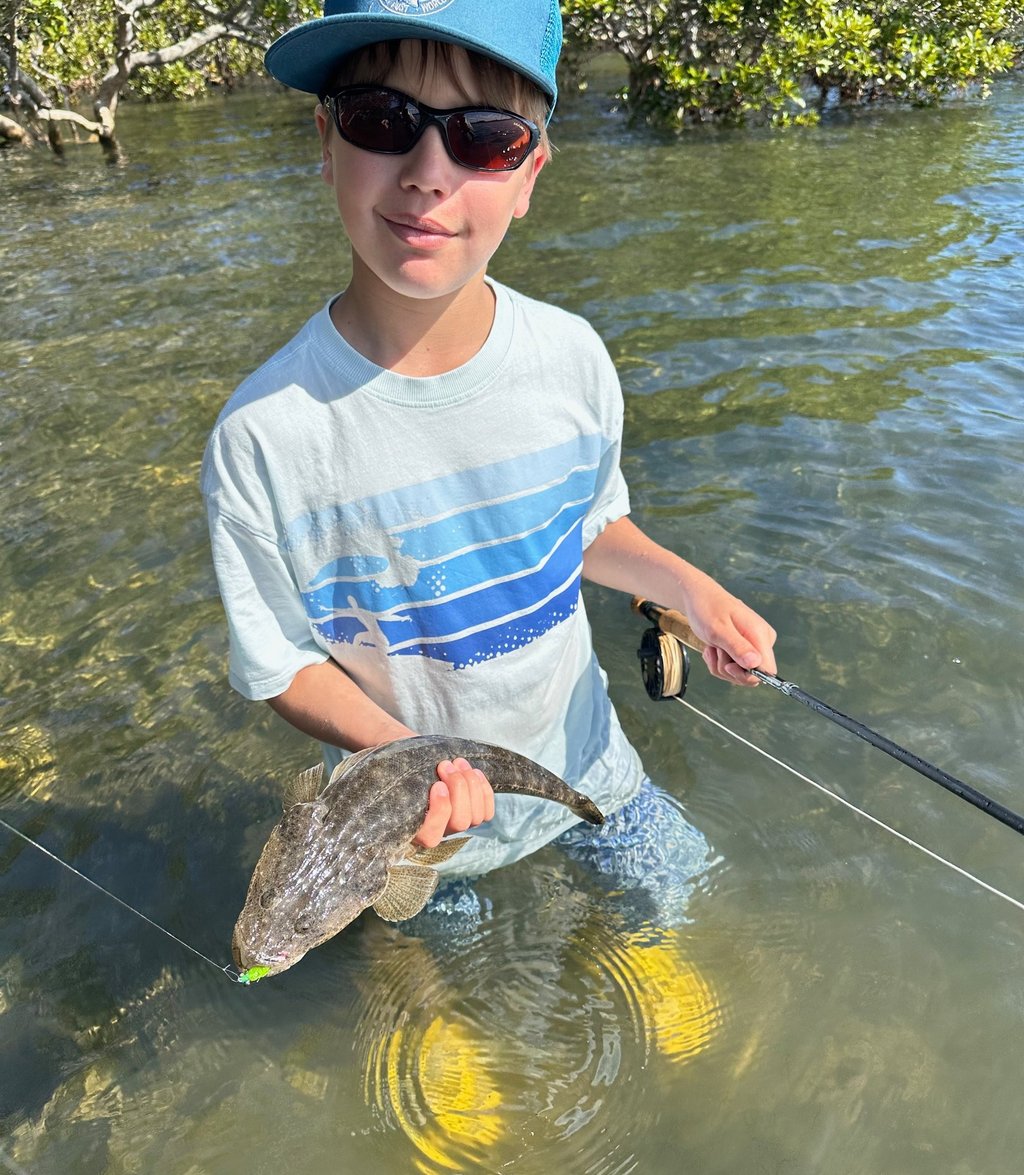
Above. My son Jensen loves chasing flathead in summer, his goal for 2026 is to catch a flathead on a fly that he has tied.
Flathead feeding patterns display some fascinating characteristics. These fish are classic ambush predators, primarily feeding on smaller fish and crustaceans. They are often found lying motionless or slowly moving along the seafloor, waiting for unsuspecting prey to come within striking distance. Understanding these habits can significantly improve your success. When targeting flathead, it’s all about covering water effectively and efficiently. Personally I like to target Flathead in the last 2 hours of the run in tide, looking for holding areas of water that are around 30 to 150cm deep. Targeting areas with structure, such as rock formations, sandbars, and mangroves, can increase chances of a successful catch, as these locations provide not only cover for flathead but also attract baitfish.
The Chartreuse Clouser has become my go-to fly—it simply works. It closely mimics many of the flathead’s natural prey, making it an extremely effective option. I prefer to tie my Clousers in sizes 1/0 to 2/0 and keep them very sparse. Eye weight will vary depending on water depth and retrieve, but a large dumbbell eye is my best all-round choice. This combination of a sparsely tied fly and heavier eyes helps the fly swim hook-point up and greatly reduces snags. I can’t stress enough that a sparsely tied Clouser consistently catches more fish than a densely dressed one.
My go-to retrieve for most locations is a short strip, short strip, then a pause of 2 to 5 seconds depending on water depth—then repeat. This is an excellent starting point and can be adjusted as needed. The rod I use is a 6-weight paired with a floating line and a leader approximately 240 cm long. Over the years, my leader setup has evolved from a simple length of 12 lb mono to the system I use today: fluorocarbon tied as follows—100 cm of 30 lb, 100 cm of 15 lb, and 40 cm of 8 lb.
One issue you may encounter when targeting flathead is fly deep-hooking. If the fly is swallowed past the hook eye, you’ll most likely lose the fish, as the flathead’s sharp teeth combined with head shakes can act like a saw on lighter tippet. To prevent this, simply remove the 8 lb section from the leader and run the 15lbs to the fly and replace the section after every fish caught.
While the Chartreuse Clouser undoubtedly stands out as a flathead killer, carrying a selection of alternative patterns can further improve your success. Prawn-style flies in natural colours such as tan or olive can be especially effective on days when flathead are more selective. As a bonus, these patterns may also entice species like bream or whiting along the way.
So tie on a clouser and fish with confidence